
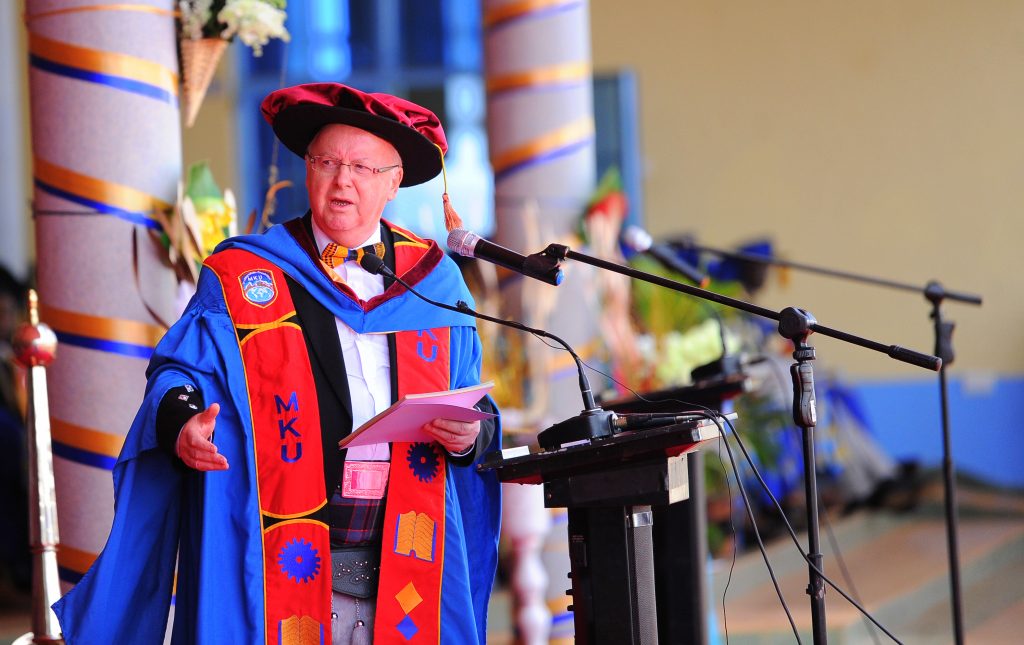
This month we hear from recently retired Professor John Sruthers about his career at the University.
It is with some trepidation that I write this piece about my long career at the university which commenced in December 1978. How is it possible to sum up such a long period of time in just a few words? I will attempt to do so.
I arrived at the then Paisley College of Technology after almost two years spent as a young lecturer in economics at the fledgling (and now highly ranked) University of Ilorin in Nigeria where I had been instrumental in helping to establish a new economics department. The difference in the weather (and the culture) was striking. Everyone in Africa greets you. No-one in the UK did so, which I found strange although in 2025 Britain, the impact of multiculturalism has certainly had many positive benefits in this area!
I was thrust straight into teaching and the beginnings of my research career which, I am glad to say, has seen something of a renaissance during the last 15 or so years. I taught on the big first year Macroeconomics class on the fantastic BA Business Economics degree- affectionately known as the BABE degree- due to its acronym! The students were tremendously able and many from those early years progressed on to high powered careers in industry as well as academia. Some, many in fact, becoming Professors and even Vice Chancellors.
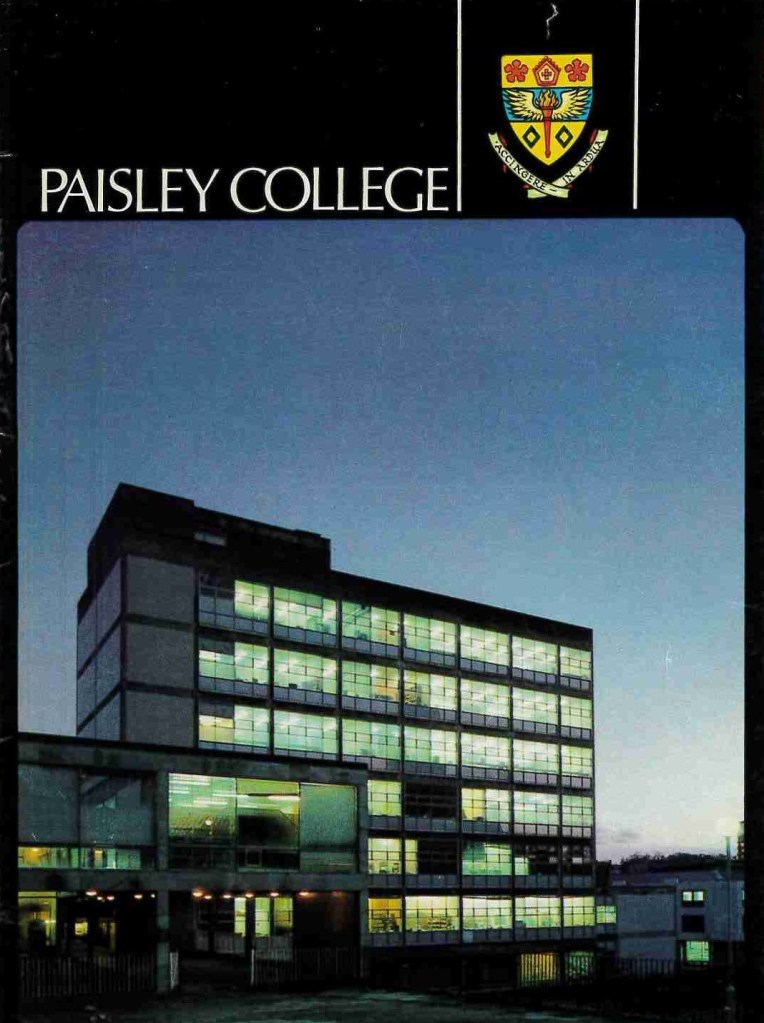
I was recruited by Professors Peter Sloane, Alistair Young and Neil Hood. Among my colleagues in those early years was Professor Martin Myant, Dr Madhavi Majmudar, Dr John Duignan and Dr Alan Reeves. We worked together teaching a range of courses on the BABE degree as well as the joint honours degree programme Public Policy, along with our colleagues in the Social Science Faculty. This was, just like the BABE degree, a unique and pioneering academic programme, which gave Paisley a strong reputation in the UK higher education sector.
Over the subsequent years, which to aid my memory, I tend to divide into decades, my teaching and research interests developed. So did my collaboration with other colleagues including teaching on courses such as: International Economics, Advanced Macroeconomics, Managerial Economics (with Dr Stuart Cochrane); and Quantitative Methods (with Dr Bob Van Der Meer and Dr Adrian Lavercombe). The latter was a course which the students had a love/hate relationship with, but they appreciated the importance of the skills it provided after they had completed it, and this was thanks to the great teaching by Bob and Adrian.
Over the years of course many changes have occurred and the BABE degree is no longer offered at the university with new subjects offered including Enterprise and Entrepreneurship. Indeed Paisley-by then had become known as Paisley College dropping the…of Technology… part of the title- was one of the first in the UK to develop these courses thanks to the excellent appointments over the years of colleagues such as: Professor David Deakins, Professor Mike Danson, Professor Geoff Whittam, and Dr John Crosbie. It became (and is still) a leading provider of courses in Entrepreneurship.
My own career developed in the 1980s and 1990s as I started to publish in the relevant journals and also ventured into publishing some books. My very first paper (in 1981) was on Inflation in Ghana in a journal entitled Development and Change and it is interesting that in recent years I have rekindled my interest in African economies by helping to establish in 2015 the Centre for African Research on Enterprise and Economic Development (CAREED) along with colleagues Dr Dina Nziku and Dr Adebisi Adewole. CAREED is now a major activity for me as its founding Director. We have annual conferences with leading keynote speakers from around the world including from UN organisations. We carry out UK government funded projects, such as a current one on aquaponics in Rwanda, and have undertaken other projects for the UN and the World Bank. As always, this carries on a tradition at Paisley of being innovative and responsive to market and other needs.
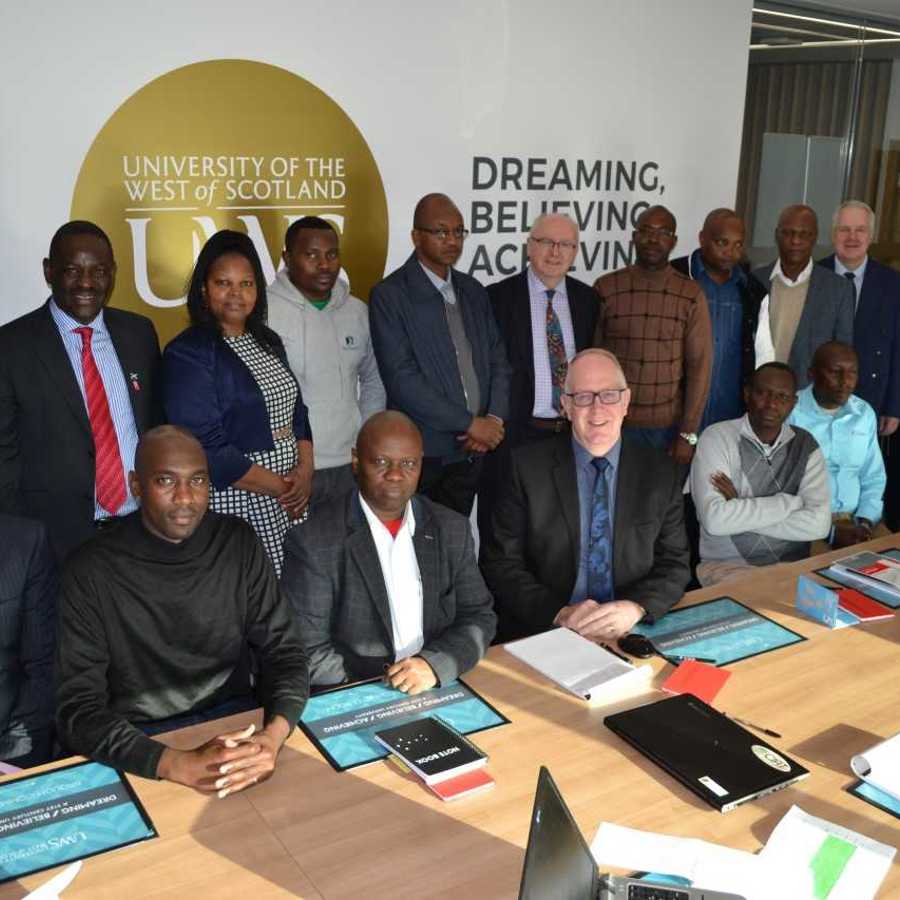
Apart from my economics work, over the years I have been involved in many administrative roles including becoming Dean of the Faculty of Business for a 6 year period until 2000; Founding Head of the Graduate School in the early 2000s; and spearheading the university’s development of modern languages and involvement in the EU’s Erasmus Programme which I led for around 10 years ably assisted by Laurence Giraud-Johnston; Susan Stuart, Paul Pilger, and the late Dr Carmen Dominguez.
Externally, I have also been busy! For example, representing the university for around 10 years on the Board of the Renfrewshire Chamber of Commerce in the 1990’s; a visiting professorship position at Glasgow University in the 2000’s, and more recently becoming the Honorary Consul for Ethiopia in Scotland in 2015, which is a quasi-diplomatic role that I still carry out for that country (e.g. to encourage trade and investment links with the country).
More recently in 2018 I was further honoured when I became the Chancellor of Mount Kenya University which is one of the largest private universities in Africa with circa 50,000 students and many campuses across East Africa. This is mainly a ceremonial role in which I preside over the annual graduation ceremonies (usually at an event which has an attendance of 50,000 people in a sports ground just 40 kilometres outside Nairobi!).
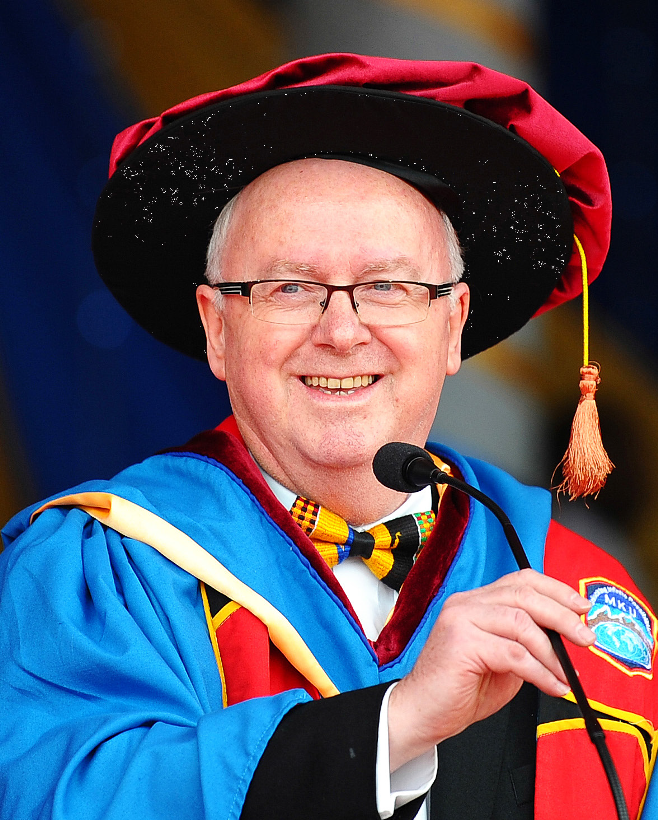
In 2022 I was delighted that I was selected by the judges at the Herald Higher Education awards as the winner in the Lifetime Achievement category, especially in the company of such strong nominees.
Finally, when I tell friends and colleagues that I have worked at the same institution for over 45 years, albeit with new names and now finally the University of the West of Scotland, they express surprise at such a long period of service. However, for me this journey has been both rewarding, especially when I meet or hear from former students and colleagues, as well as fascinating since I have witnessed the institution’s many transformations over these years.
I am still of the view that UWS is a unique institution of higher education that continues to serve its many stakeholders, including those across the now 5 campuses (Paisley, Ayr, Lanarkshire, Dumfries, and London) with a strong, relevant and high quality experience that they value greatly. For me, it has been an honour and privilege to be part of its ‘recent’ evolution and development.

Now that I am finally retired, it is time to reflect on what lies ahead. I am especially thankful that the University has awarded me the title of Emeritus Professor which will allow me to remain involved with the institution, especially in the areas of research, and in support of the ongoing work of CAREED. Of course, after such a lengthy career I am looking forward to a restful break, though no doubt I will continue to research and write papers. They say that academics never really retire!
 WEST | Alumni Blog